
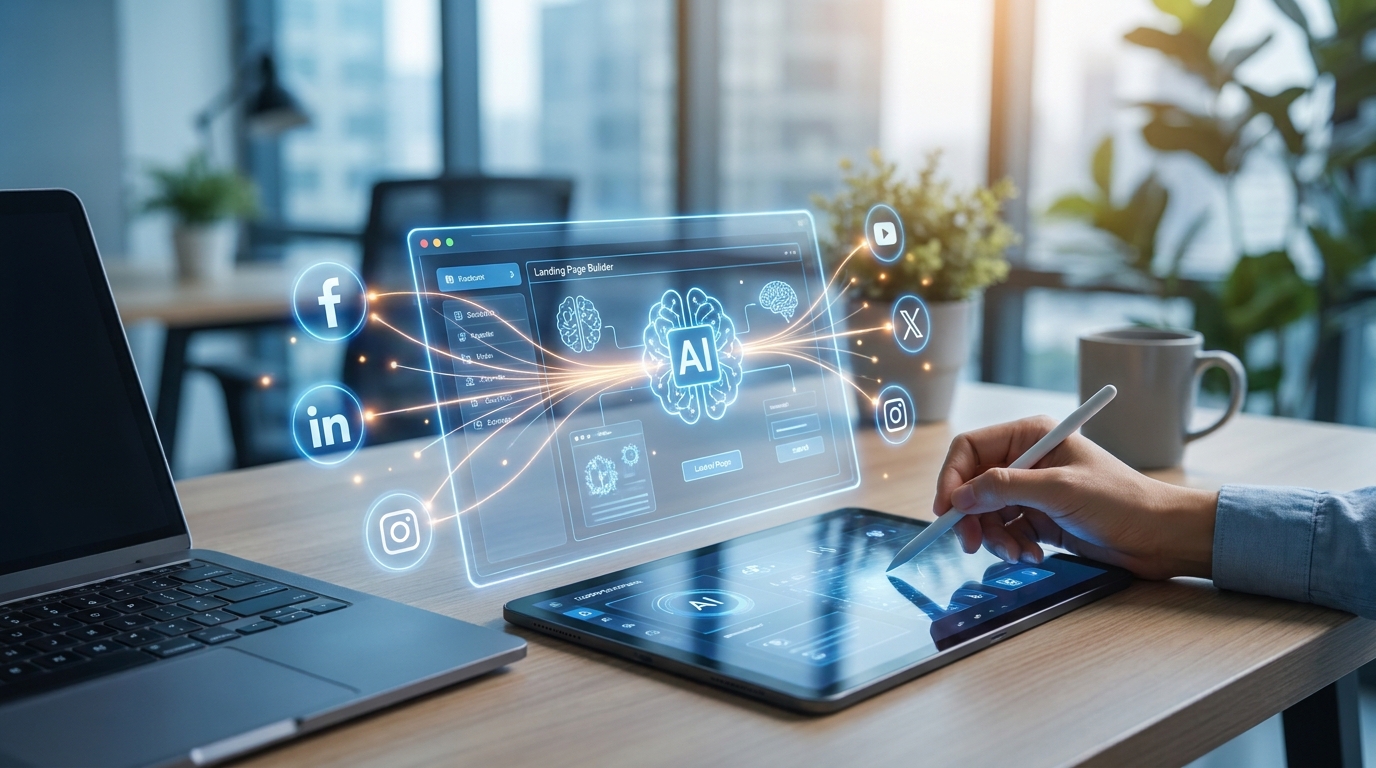
AI tools are making it easier for small businesses, creators, and marketing teams to launch landing pages without relying on a full design or development team. When used well, AI can help you move from a rough campaign idea to a published page much faster while keeping your messaging aligned with your audience and business goals.
If you run social media campaigns, promote offers, or manage content for multiple brands, a streamlined landing page workflow can improve speed, consistency, and lead generation. The key is to treat AI as a productivity partner for planning, copywriting, structure, and testing, not as a replacement for strategy.
This article explores a practical approach to creating AI-powered landing pages and explains how social media scheduling, content automation, and analytics tools like Social Connecter can help you promote those pages more efficiently.
Why AI Landing Pages Matter for Social Media Marketing
A landing page is often where social traffic turns into measurable business results. Whether you are promoting a lead magnet, webinar, service, product launch, or free consultation, your social posts need a focused destination.
AI can help marketers speed up several parts of that process, including:
- Creating a project brief and page outline
- Drafting headlines, subheads, and calls to action
- Organizing page sections around audience pain points
- Generating variations for testing
- Supporting faster campaign launches across channels
For busy entrepreneurs and agencies, that speed matters. Instead of waiting days to assemble a page, you can create a strong first version quickly, refine it, and connect it to your broader social media marketing strategy.
Start With a Clear Campaign Plan
Before generating any copy or layout ideas, define what the page needs to accomplish. AI works best when your inputs are specific.
Ask These Planning Questions
- Who is the target audience?
- What single action should visitors take?
- What problem does the offer solve?
- What traffic sources will send visitors to the page?
- What proof, examples, or testimonials can support credibility?
For example, if you are running Instagram and Facebook ads for a downloadable guide, the landing page should focus on one conversion goal: collecting an email address. If you are promoting a service through LinkedIn content, the page may instead aim to book discovery calls.
This is also where Social Connecter can support your workflow. By planning your promotional posts and scheduling them in advance, you can align your landing page launch with a coordinated content calendar instead of posting manually at the last minute.
Use AI to Build the First Draft Faster
Once your campaign plan is clear, AI can help create a strong starting point for the page. This may include the page structure, value proposition, headline options, FAQ content, and CTA language.
Core Sections to Generate
- A compelling headline tied to the main offer
- A short introduction that explains the benefit
- Bullets that highlight outcomes or features
- Social proof such as testimonials or use cases you provide
- A clear call to action
- Frequently asked questions to reduce friction
The most effective AI-generated landing pages still need human editing. Review the language for accuracy, tone, clarity, and brand fit. Remove generic phrases and make sure every section supports the same conversion goal.
For social media managers, this creates another advantage: the same AI-assisted messaging can be repurposed into post captions, ad copy, teaser content, and email follow-ups. Social Connecter can then help you schedule that content across platforms from one workflow, reducing repetitive tasks.
Design for Clarity, Not Complexity
A high-converting landing page does not need to be visually complicated. In many cases, simpler pages perform better because they keep visitors focused.
Best Practices for Layout
- Keep the main headline visible near the top
- Use one primary call to action
- Break up text with short sections and subheads
- Include visual elements that support the offer
- Remove unnecessary navigation when possible
If AI is assisting with code or page structure, review the mobile experience carefully. Many visitors from social media platforms will arrive on mobile devices, so load speed, button placement, and readability matter.
For content creators and agencies handling multiple campaigns, a repeatable page template can save even more time. Build one strong framework, then use AI to adapt the messaging for different offers or audience segments.
Connect Your Landing Page to a Promotion System
Publishing the page is only one part of the job. To generate results, you need a traffic plan.
That is where automation and scheduling become essential. Once the page is live, create a promotional sequence that includes:
- Launch posts for Facebook, Instagram, LinkedIn, and X
- Short-form promotional content for recurring visibility
- Reminder posts tied to urgency or deadlines
- Follow-up educational content that links back to the page
- Repurposed content from the landing page FAQ or benefits list
Social Connecter can help centralize this process by letting you organize, schedule, and automate your social media content in advance. Instead of switching between tools, marketers can maintain a more efficient publishing rhythm and keep campaigns active without constant manual posting.
Measure Performance and Improve Results
AI can help you launch faster, but analytics help you improve. After your landing page starts receiving traffic, monitor what is actually working.
Key Metrics to Watch
- Click-through rate from social posts
- Landing page conversion rate
- Bounce rate or drop-off signals
- Performance by platform or audience segment
- CTA engagement and form completions
If one message performs better on LinkedIn than on Instagram, update your content strategy accordingly. If users click but do not convert, test a new headline, stronger social proof, or a simpler form.
With a platform like Social Connecter, you can manage scheduled content more strategically by pairing campaign performance insights with your future posting plan. That makes it easier to refine messaging, improve timing, and support ongoing business growth through better social media execution.
Practical Takeaway for Small Businesses and Agencies
AI landing pages are most effective when they are part of a larger digital marketing system. The page itself should be clear, focused, and conversion-driven. Your social media content should consistently support that goal. And your workflow should make it easy to create, schedule, test, and improve without wasting time.
For small business owners, entrepreneurs, and agencies, this combination of AI content creation and social media automation can reduce bottlenecks and help campaigns go live faster. Instead of treating page creation and social promotion as separate tasks, bring them together into one repeatable process.
If you want to save time managing your content calendar, streamline your social media scheduling, and support smarter campaign promotion, visit Social Connecter to explore tools built for productivity and growth.
Source inspiration: AI Landing Pages: From Project Plan to Published Page by Social Media Examiner.